

Attic mould can develop when moisture remains trapped around roof sheathing, insulation, framing, ventilation openings, or mechanical penetrations. It may be discovered during a home inspection, after a roof or ventilation problem, or when a homeowner notices staining, odours, or damaged materials.
For attic-specific help, see our Attic Mold Removal service.
Mould in an attic should not be treated as a simple surface-cleaning issue. The source of moisture, the affected materials, the insulation condition, and the required containment should all be reviewed before work begins.
Common signs of attic mould
Possible signs include:
- Dark or discoloured areas on roof sheathing or framing
- Musty or persistent odours
- Damp or compressed insulation
- Condensation, frost, or water staining
- Staining around bathroom exhaust vents or roof penetrations
- Blocked or poorly directed ventilation
- Visible growth around the roof edges, soffits, or eaves
- Previous leaks, ice damming, or roof damage
These signs do not by themselves establish the extent or cause of the problem. A proper review is needed before deciding what must be removed, cleaned, repaired, or replaced.
Why attic moisture matters
Attic mould is often connected to an underlying moisture condition. Possible causes include:
- Inadequate or blocked ventilation
- Bathroom fans discharging into the attic
- Air leakage from the living space
- Roof leaks or flashing failures
- Condensation during cold weather
- Damaged or displaced insulation
- Improperly sealed plumbing or mechanical penetrations
If the moisture source is not addressed, mould or staining may return after cleaning. The remediation scope should therefore consider both the affected materials and the conditions that contributed to the problem.
What the remediation process may involve
The exact work depends on the attic configuration and the condition of the materials. A typical process may include:
1. Reviewing the attic and available information
We review photographs, the affected areas, access conditions, insulation, ventilation, and any inspection or moisture reports that are available.
2. Defining the affected area
The scope should identify which materials are affected and whether the work involves cleaning, removal, disposal, or a combination of these activities.
3. Establishing safe work controls
Depending on the condition and location, the work may require protective measures, controlled access, containment, air-control equipment, and appropriate personal protective equipment.
4. Removing affected materials where required
Damaged insulation, debris, or other materials may need to be removed where cleaning is not appropriate or where the material cannot be properly restored.
5. Cleaning and treating remaining surfaces
Remaining surfaces may be cleaned using methods appropriate to the material and condition. The objective is to remove affected material and residue without spreading contamination to other areas.
6. Addressing related repairs or reinstatement
After remediation, the project may require insulation replacement, localized repairs, air-sealing work, or reinstatement of areas opened during the work. These items should be clearly identified in the agreed scope.
Should homeowners clean attic mould themselves?
Small, isolated surface staining may sometimes be suitable for review by a qualified professional. However, homeowners should avoid disturbing extensive growth, contaminated insulation, heavily affected sheathing, or areas where the source of moisture is unknown.
Do not sweep, brush, or use ordinary household equipment in a way that could spread dust or debris through the attic or living space. If the attic is difficult to access, has visible moisture damage, or requires insulation removal, obtain a professional assessment before beginning work.
What information helps before pricing?
Before a scope can be reviewed, provide:
- The property location
- Photographs of the attic and affected areas
- Approximate attic size
- The age and type of insulation, if known
- Any history of leaks, condensation, or ventilation problems
- Inspection, roofing, or moisture reports
- Access details
- Whether insulation replacement or related repairs may be required
Photographs help with an initial review, but they do not replace an on-site assessment where the condition or scope is uncertain.
Attic mould remediation in the GTA
Kleen Condition provides mould remediation and related reinstatement support for homeowners, property managers, and occupied properties in Toronto, Mississauga, Brampton, Richmond Hill, and surrounding GTA areas.
Send photographs and project details for an initial review. We can help clarify the likely scope, affected materials, access requirements, and whether related reinstatement should be included.
For mould problems elsewhere in the home, see our Residential Mould Remediation service.
Work Clean. Work Kleen.
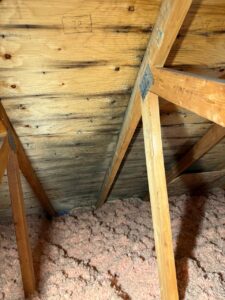
Before remediation – visible staining on attic roof sheathing.